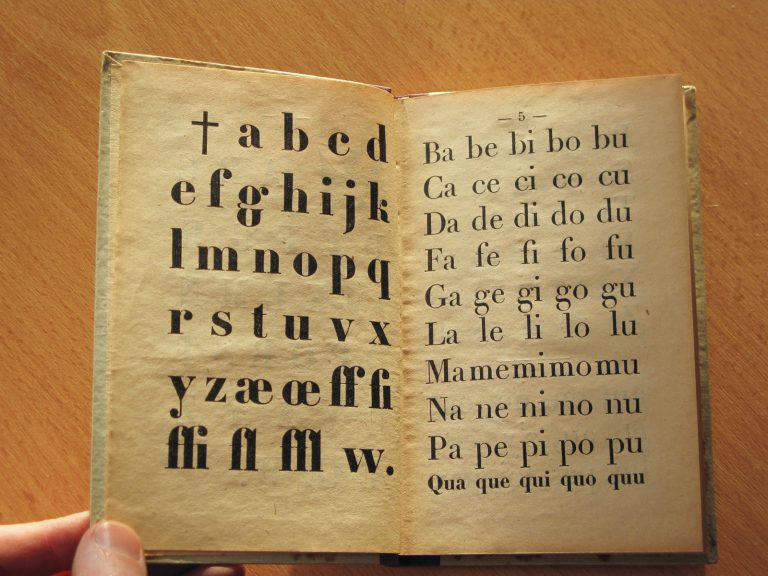
Dans le cadre de l’Appel à Projets 2007 de l’Agence Nationale de la Recherche, catégorie « Jeunes chercheurs », une équipe pluridisciplinaire a étudié la maison d’édition Mame à Tours, en particulier sous l’angle de sa production destinée à la jeunesse.
A partir de janvier 2009 : visitez le « Carnet de recherches » de l’équipe Mame sur la plate-forme Hypothèses du Centre pour l’Edition Electronique Ouverte : Mame & Fils.
Projet soutenu par la Maison des Sciences de l’Homme Val de Loire.
Le projet Mame
La maison d’édition fondée par Charles-Pierre Mame à Angers en 1779 donne naissance, à la génération suivante, et à Tours, à ce qui deviendra très vite un empire de l’édition et de la librairie au XIXe siècle. Deux de ses fils, et surtout son petit-fils Alfred Mame donneront en effet à l’entreprise familiale une impulsion qui fait entrer la production de livres dans l’ère industrielle. La maison Mame devient la référence en matière d’édition religieuse, au point d’obtenir l’exclusivité du rite romain dans le monde entier ; par ailleurs Alfred Mame comprend immédiatement le parti à tirer des lois scolaires qui se succèdent à partir des années 1830, et fonde ainsi sa réussite sur la production à grande échelle de livres de prix et d’ouvrages pour la jeunesse.
Or l’histoire de cette maison à la réussite et à la pérennité sans exemple n’a pas fait l’objet d’étude universitaire d’envergure, notamment parce que les archives de la maison d’édition ont été totalement détruites dans le bombardement de Tours en 1940. Cette lacune pèse à la fois sur l’historiographie économique, sociale et politique locale, sur l’histoire de l’édition française au XIXe siècle, et en particulier sur l’étude universitaire de l’édition et de la littérature destinées à la jeunesse. Ce dernier champ d’analyse, récent dans l’université française, se doit de combler ses retards par rapport notamment à l’historiographie anglo-saxonne. Or toute réflexion générale sur les conditions d’émergence et les spécificités d’une littérature pour la jeunesse se doit dans un premier temps d’étudier avec rigueur les grandes manifestations historiques de cette production.
Ce projet a réuni des chercheurs de plusieurs disciplines (histoire économique et sociale, histoire de l’édition, histoire de l’art, littérature) décidés à envisager l’aventure éditoriale de la maison Mame dans toutes ses dimensions. L’objectif était aussi de constituer une base de référence pour les recherches ultérieures portant sur la littérature pour la jeunesse au XIXe siècle. L’approche pluridisciplinaire se voulait par ailleurs le modèle d’une démarche globale d’analyse des productions culturelles destinées à l’enfance.
The House of Mame at Tours (1796-1975) : two centuries of publishing for young people
The eponymous publishing house founded by Charles-Pierre Mame, in Angers in 1779, gave birth in Tours, a generation later, to what would become a publishing and printing empire in the 19th century. Two of Mame’s sons, and especially his grandson, Alfred Mame, provided the impetus that propelled the family business into the industrial era of book publishing. The house of Mame became the reference for religious publishing, eventually obtaining the exclusive right to publish the liturgy of the Roman Catholic Church world-wide. Beyond that, Alfred Mame immediately understood the opportunity contained in the succession of educational laws passed from the 1830’s on and compounded his firm’s success with the large scale production of school prize books and other works for young people.
Nevertheless, the history of this publishing house, whose lasting success is unparalleled, has never been the subject of any large-scale university study, notably because the publisher’s corporate archives were completely destroyed during the bombardment of Tours in 1940. This lacuna in our knowledge weighs heavily on economic, social, and political historiography at the local level, on the study of the larger history of the French publishing industry in the 19th century, and, in particular, on university studies on publishing and literature for young people. This last field of analysis, which has only recently begun in France at the university level, faces the additional challenge of overtaking, notably, Anglo-Saxon historiography. In any event, all study of the global conditions governing the emergence and specific details of the history of literature for young people must, in the first place, rigorously examine the principal expressions of that history, such as the rise and dominance of the house of Mame.
This project brings together researchers from several disciplines (economic and social history, the history of publishing, history of art, and literature) who are committed to examining the publishing saga of the house of Mame in all its multi-faceted dimensions. Our objective includes the creation of a database for future research on literature for young people in the 19th century. With our multi-disciplinary approach, we wish to create a model for future analyses of society’s cultural approach to young people.